

An inside look at how SQC uses machine learning to automate and accelerate the atomic-precision manufacturing process for our quantum-enhanced AI chips, Watermelon™
Core to SQC’s advantage is our full-stack, materials science approach to quantum computing: building quantum processors (QPUs) with only two elements, prioritising purity and simplicity. PAQMan™, our Precision Atom Qubit Manufacturing process, operates at a scale that is 100x smaller than the best classical processes, placing phosphorous atoms in silicon with 0.13 nanometer accuracy.
This precision can be hard to grasp, but it is critical to building processors with the quality and control that quantum computing demands. SQC has perfected this technology over 25 years and nine generations, condensing an extensive, multi-step foundry process into a single tool: our specially adapted and patented Scanning Tunneling Microscopes (STM).
Once an instrument for viewing atoms, the STM is now an automated, industrial manufacturing system. It is the basis for our unmatched one-week chip iteration cycle, and the enabler for our application-specific products, already in market today.
Recently, SQC pushed this automation further by deploying custom machine learning scripts to help pattern our quantum-enhanced AI chips, Watermelon, with the click of a button.
Atomic-scale device patterning in minutes
Patterning a Watermelon device (placing each quantum dot exactly where it belongs both individually and relative to each other) was once a manual process that took one of SQC's atomic fabrication scientists hours to complete. Now, using machine learning scripts developed by our Head of Atomic Fabrication, Joris Keizer, the process is completed in minutes.
These scripts run inside Quokka, our custom-built atomic fabrication control software, generating command sequences that feed directly into the STM for patterning. The vast majority of this process now runs without human intervention, enabling a significant gain in both speed and productivity.
When device patterning is fast, repeatable and automated, changes to a device design are no longer limited by time, or what can be achieved by hand. This allows SQC to continue optimising Watermelon for the market we already serve: global enterprise customers across energy utilities, telecommunications, high-frequency trading and more.
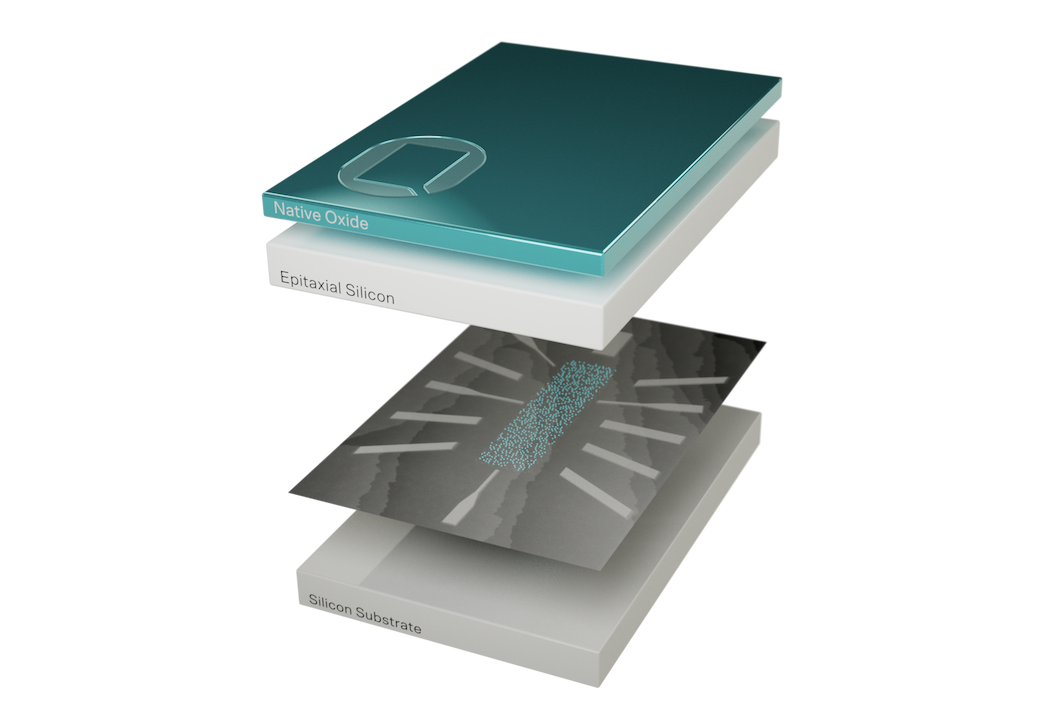
Watermelon chip render: 70 precision-placed quantum dots encapsulated in layers of pure silicon.
The path forward
SQC is now expanding ML-enabled, atomic-scale device patterning to our gate-based QPUs as we build toward our universal, fault-tolerant quantum system.
This automation has already delivered success when patterning hundreds of thousands of quantum dots: a capability that frees our team to pursue ambitious, complex device designs. The next step is to fully automate this process, further integrating machine learning and computer vision to remove manual checkpoints.
Atomic precision becoming a routine, automated manufacturing step is what moves quantum computing from exotic to industrial. The automation we have unlocked with Watermelon is exactly what that looks like in practice.
/ Stay Updated ON DISCOVERIES AND ACHIEVEMENTS
Keep in touch
We continually publish achievements and results with transparency. Hear from SQC on our journey to a million qubits and beyond.
